
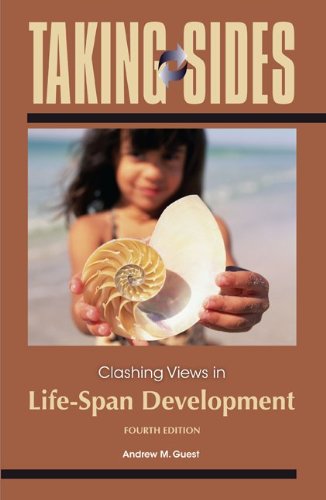
Taking sides : Clashing views in life-span development / selected, edited, and with introductions by Andrew M. Guest.
Series: McGraw-Hill contemporary learning series | Taking sidesPublication details: New York : McGraw-Hill, c2013.Edition: 4th edDescription: xxviii, 420 p. ; 24 cmISBN:- 9780078050299
- 0078050294
- Clashing views in life-span development
- Life-span development
- Lifespan devlopement
| Item type | Current library | Home library | Call number | Materials specified | Copy number | Status | Date due | Barcode | |
|---|---|---|---|---|---|---|---|---|---|
| AM | PERPUSTAKAAN TUN SERI LANANG | PERPUSTAKAAN TUN SERI LANANG KOLEKSI AM-P. TUN SERI LANANG (ARAS 5) | BF713.T357 2013 (Browse shelf(Opens below)) | 1 | Available | 00002093132 |
Includes bibliographical references.
Unit 1. General issues in the study of life-span development. Does the cultural environment influence lifespan development more than our genes?-- Are peers more important than parents during the process of development? -- Is Chinese parenting culturally distinct? -- Unit 2. Prenatal development and infancy. Is drinking alcohol while pregnant an unnecessary risk to prenatal development? -- Is breastfeeding inevitably best for healthy development? -- Are there good reasons to allow infants to consume electronic media, such as television? -- Unit 3. Early childhood and middle childhood. Do innate gender differences influence how children learn? -- Should bipolar disorder be diagnosed and treated in children? -- Are violent video games necessarily bad for children? -- Unit 4. Adolescence. Should contemporary adolescents be engaged in more structured activities? -- Does the adolescent brain make risk taking inevitable? -- Unit 5. Youth and emerging adulthood. Is there such a thing as'emerging adulthood'? -- Is there a'narcissism epidemic' among contemporary young adults? -- Are today's college students interested in engaging with religion and spirituality? -- Unit 6. Middle adulthood. Do adults need to place more value on marriage? -- Is parenthood a detriment to well-being? -- Unit 7. Later adulthood. Is more civic engagement among older adults necessarily better? -- Is'mild cognitive impairment' too similar to normal aging to be a relevant concept? -- Should we try to'cure' old age?
There are no comments on this title.