
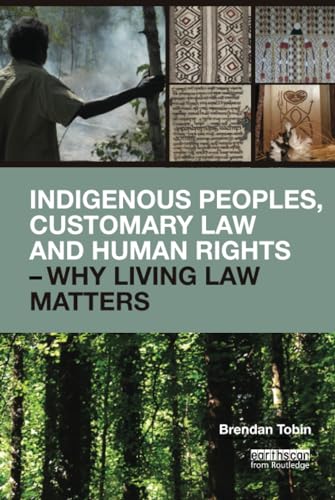
Indigenous peoples, customary law and human rights : why living law matters / Brendan Tobin.
Series: Routledge studies in law and sustainable development seriesPublisher: London : Routledge, Taylor & Francis Group, 2014Copyright date: ©2014Description: xxii, 302 pages ; 24 cmContent type:- text
- unmediated
- volume
- 9781138019683 (hardback)
- 1138019682 (hardback)
| Item type | Current library | Home library | Call number | Materials specified | Copy number | Status | Date due | Barcode | |
|---|---|---|---|---|---|---|---|---|---|
| AM | PERPUSTAKAAN UNDANG-UNDANG | PERPUSTAKAAN UNDANG-UNDANG KOLEKSI AM-P. UNDANG-UNDANG | C21.72.T634 2 (Browse shelf(Opens below)) | 1 | Available | 00002128703 |
Includes bibliographical references (pages 261-289) and index.
Introduction : indigenous law and customary law -- Customary Law in Context -- Self-Determination in Practice -- Where Custom is the Law -- In Search of the Living Law -- Ancestral Rights Recovered : Lands and Traditional Territories -- Natural Resources or Essences of Life? -- Right to Culture and Cultural Heritage -- Traditional Knowledge -- Intercultural equity and justice -- In closing : Traditions for the future.
'This highly original work demonstrates the role and importance of customary law as the primary source of law for indigenous peoples all over the world. The book reviews the relationship between customary, positive and natural law from the time of Plato up to the present day. It examines its recognition in constitutional law and in international human rights and environmental instruments. The author analyses the role of customary law in tribal, national and international governance of indigenous peoples' lands, resources and cultural heritage. He explores the challenges and opportunities for its recognition by courts and alternative dispute resolution mechanisms, including issues of proof of law and conflicts between customary practices and human rights. It concludes that indigenous peoples' rights to their customary legal regimes and states' obligations to respect and recognise customary law, in order to secure their human rights, are principles of international customary law, and as such binding on all states. At a time when the land and resources of indigenous peoples are increasingly under threat, the book provides an accessible overview of the key issues for both legal and non-legal scholars, students of human rights and environmental justice, and indigenous peoples themselves'-- Provided by publisher.
There are no comments on this title.