
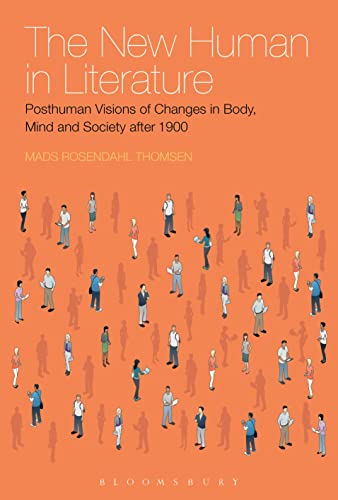
The new human in literature : posthuman visions of changes in body, mind and society after 1900 / Mads Rosendahl Thomsen.
Publisher: United Kingdom : Bloomsbury, 2013Description: 258 pages ; 25 cmContent type:- text
- unmediated
- volume
- 9781441183194
| Item type | Current library | Home library | Call number | Materials specified | Copy number | Status | Date due | Barcode | |
|---|---|---|---|---|---|---|---|---|---|
| AM | PERPUSTAKAAN TUN SERI LANANG | PERPUSTAKAAN TUN SERI LANANG KOLEKSI AM-P. TUN SERI LANANG (ARAS 5) | PN56.H75T486 (Browse shelf(Opens below)) | 1 | Available | 00002195353 |
Bibliography : page 235-248.
Machine generated contents note: -- Introduction -- The Triune Human 1. A systemtic view of the human 2. An emergent cultural history of the 20th century 3. History, technique, imagination 4. The new human and the medium of literature -- Self-Modernization 5. Virginia Woolf 6. William Carlos Williams 7. Louis-Ferdinand Celine --The Grand Projects 8. Chinua Achebe 9. Mo Yan 10. Orhan Pamuk -- The Final Frontier 11. Literature as lab 12. Don DeLillo 13. Michel Houellebecq -- Conclusion -- Notes -- Bibliography -- Index.
'Twentieth-century literature changed understandings of what it meant to be human. Mads Rosendahl Thomsen, in this historical overview, presents a record of literature's changing ideas of mankind, questioning the degree to which literature records and creates visions of the new human. Grounded in the theory of Niklas Luhmann and drawing on canonical works, Thomsen uses literary changes in the mind, body and society to define the new human. He begins with the modernist minds of Virginia Woolf, Williams Carlos Williams and Louis-Ferdinand Celine's, discusses the society-changing concepts envisioned by Chinua Achebe, Mo Yan and Orhan Pamuk. He concludes with science fiction, discussing Don DeLillo and Michel Houellebecq's ideas of revolutionizing man through biotechnology. This is a study about imagination, aesthetics and ethics that demonstrates literature's capacity to not only imagine the future but portray the conflicting desires between individual and various collectives better than any other media. A study that heightens reflections on human evolution and posthumanism'-- Provided by publisher.
There are no comments on this title.