
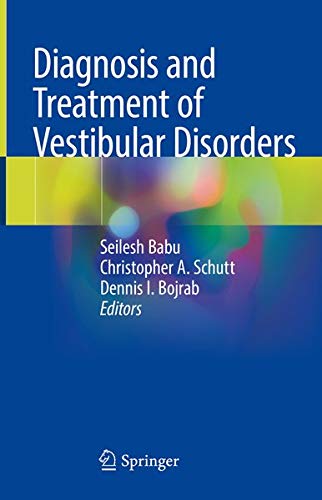
Amazon cover image
Image from Amazon.com

Diagnosis and treatment of vestibular disorders / Seilesh Babu, Christopher A. Schutt, Dennis I. Bojrab, editors.

Contributor(s): Publisher: Cham, Switzerland : Springer, 2019Description: 1 online resource (xii, 391 pages) : illustrations (some color)Content type:
  • text
Media type:
  • computer
Carrier type:
  • online resource
ISBN:
  • 9783319978581
  • 3319978586
  • 3319978578
  • 9783319978574
  • 9783319978598
  • 3319978594
Subject(s): Genre/Form: Additional physical formats: Print version:: No title; Print version:: No titleDDC classification:
  • 617.8/82 23
LOC classification:
  • RF260
Online resources:
Contents:
Intro; Preface; Contents; Contributors; Part I: The Vestibular System; Chapter 1: Anatomy and Physiology of the Vestibular System; Introduction; Anatomy and Physiology of the Peripheral Vestibular System; The Inner Ear Labyrinths; Inner Ear Sensory Hair Cells; Semicircular Canals; Otolith Organs; Anatomy and Physiology of the Central Vestibular System; The Vestibular Nerve; The Vestibular Nuclear Complex; Motor Outputs of Vestibular System; The Vestibuloocular Reflex (VOR); Vestibulospinal Reflex (VSR); Vestibulocerebellum; Vestibular Cortical Centers; References
Chapter 2: Mechanism of Compensation After Unilateral LossFunctional Changes in Vestibular Compensation; Structural Changes in Vestibular Compensation; Recovery of Static Versus Dynamic Vestibular Deficits; Vestibular Compensation Is Idiosyncratic; Vestibular Rehabilitation; References; Part II: Evaluation of the Dizzy Patient; Chapter 3: History and Physical Examination of the Dizzy Patient; Introduction; History; Physical Examination; General Physical Exam; Assessment of Eye Movements; Fistula Test; Dix-Hallpike Maneuver; Head Thrust Test; Head Shaking Test; Dynamic Visual Acuity Testing
Cerebellar TestingTympanic Membrane; Tuning Fork Exam; Cranial Nerve Exam; Specific Disorders; Benign Paroxysmal Positional Vertigo; Labyrinthitis/Vestibular Neuritis; Meniere's Disease; Persistent Postural-Perceptual Dizziness; Vestibular Migraine; Mal de Debarquement; Orthostatic Hypotension/Presyncope; Cervical Vertigo; Superior Semicircular Canal Dehiscence; Central Ischemia; Conclusion; References; Chapter 4: Electronystagmography and Videonystagmography; Introduction; Electronystagmography and Videonystagmography; Electronystagmography/Videonystagmography Test Battery
Vestibular Function TestsPositioning Test (Dix-Hallpike Maneuver); Positional Test; Gaze Test; Vestibular Oculomotor Function; Bithermal Caloric Test; Headshake Test; Non-vestibular Tests; Saccade Test; Tracking Test; Optokinetic Test; Benefits of ENG/VNG; Limitations of ENG/VNG; Summary; References; Chapter 5: The Vestibulo-ocular Reflex and Head Impulse Testing; References; Chapter 6: Rotary Chair Testing; Introduction to Rotational Testing; Principles of Rotational Testing; Rotational Test Protocols; Sinusoidal Harmonic Acceleration; Sinusoidal Harmonic Acceleration Analysis Parameters
Sinusoidal Harmonic Acceleration InterpretationNormal Sinusoidal Harmonic Acceleration Response; Unilateral Peripheral Impairments; Bilateral Peripheral Impairments; Central Impairments; Sinusoidal Harmonic Acceleration Clinical Summary; Velocity Step Testing; Velocity Step Stimuli; Physiologic Vestibular Ocular Reflex Response; Low-Velocity Step Testing; High-Velocity Step Testing; Clinical Response Patterns for Velocity Step Testing; Low-Velocity Step Response Interpretation; High-Velocity Step Response Interpretation; Chapter Summary; References; Chapter 7: Dynamic Posturography
Summary: This text reviews the current understanding of vestibular anatomy allowing for a framework of reference, and how it's applied to vestibular testing, diagnosis and management of dizziness. Vestibular testing is an important tool in the evaluation and management of the patient with dizziness. It aids in establishing a diagnosis and determining the side or site of the lesion. In addition, it guides practitioners in selection of treatment and allows the ability of the patient's condition to be evaluated over its time course. Common vestibular pathologies such as benign positional vertigo, Meniere's disease, multisensory imbalance, vestibular neuritis, superior canal dehiscence, and vestibular migraine will be addressed in a concise and understandable manner. The text follows a clear format in which the etiology, pathophysiology, diagnostic features and medical or surgical management of such pathologies are discussed. The book gains increased importance as superior canal dehiscence and vestibular migraine are relatively new hot topics. Lastly, relatively rare entities such as bilateral vestibular hypofunction, pediatric vestibular disorders and central vestibular disorders are discussed. This text serves as a complete reference for clinicians, students and researchers interested in this common and severe disorder allowing for improved patient care and advancement of knowledge in the field. Chapters are written by acknowledged experts, allowing summary review of the newest and most up-to-date understanding of scientific information. Diagnosis and Treatment of Vestibular Disorders will be an invaluable resource for otolaryngologists, neurologists, otologists and neurotologists, basic science and translational researchers with interests in the vestibular system, fellows and residents in aforementioned fields, and general practitioners with an interest in patients with symptoms of dizziness.
Tags from this library: No tags from this library for this title. Log in to add tags.
Star ratings
    Average rating: 0.0 (0 votes)
No physical items for this record

Includes index.

Online resource; title from PDF title page (SpringerLink, viewed February 4, 2019).

Intro; Preface; Contents; Contributors; Part I: The Vestibular System; Chapter 1: Anatomy and Physiology of the Vestibular System; Introduction; Anatomy and Physiology of the Peripheral Vestibular System; The Inner Ear Labyrinths; Inner Ear Sensory Hair Cells; Semicircular Canals; Otolith Organs; Anatomy and Physiology of the Central Vestibular System; The Vestibular Nerve; The Vestibular Nuclear Complex; Motor Outputs of Vestibular System; The Vestibuloocular Reflex (VOR); Vestibulospinal Reflex (VSR); Vestibulocerebellum; Vestibular Cortical Centers; References

Chapter 2: Mechanism of Compensation After Unilateral LossFunctional Changes in Vestibular Compensation; Structural Changes in Vestibular Compensation; Recovery of Static Versus Dynamic Vestibular Deficits; Vestibular Compensation Is Idiosyncratic; Vestibular Rehabilitation; References; Part II: Evaluation of the Dizzy Patient; Chapter 3: History and Physical Examination of the Dizzy Patient; Introduction; History; Physical Examination; General Physical Exam; Assessment of Eye Movements; Fistula Test; Dix-Hallpike Maneuver; Head Thrust Test; Head Shaking Test; Dynamic Visual Acuity Testing

Cerebellar TestingTympanic Membrane; Tuning Fork Exam; Cranial Nerve Exam; Specific Disorders; Benign Paroxysmal Positional Vertigo; Labyrinthitis/Vestibular Neuritis; Meniere's Disease; Persistent Postural-Perceptual Dizziness; Vestibular Migraine; Mal de Debarquement; Orthostatic Hypotension/Presyncope; Cervical Vertigo; Superior Semicircular Canal Dehiscence; Central Ischemia; Conclusion; References; Chapter 4: Electronystagmography and Videonystagmography; Introduction; Electronystagmography and Videonystagmography; Electronystagmography/Videonystagmography Test Battery

Vestibular Function TestsPositioning Test (Dix-Hallpike Maneuver); Positional Test; Gaze Test; Vestibular Oculomotor Function; Bithermal Caloric Test; Headshake Test; Non-vestibular Tests; Saccade Test; Tracking Test; Optokinetic Test; Benefits of ENG/VNG; Limitations of ENG/VNG; Summary; References; Chapter 5: The Vestibulo-ocular Reflex and Head Impulse Testing; References; Chapter 6: Rotary Chair Testing; Introduction to Rotational Testing; Principles of Rotational Testing; Rotational Test Protocols; Sinusoidal Harmonic Acceleration; Sinusoidal Harmonic Acceleration Analysis Parameters

Sinusoidal Harmonic Acceleration InterpretationNormal Sinusoidal Harmonic Acceleration Response; Unilateral Peripheral Impairments; Bilateral Peripheral Impairments; Central Impairments; Sinusoidal Harmonic Acceleration Clinical Summary; Velocity Step Testing; Velocity Step Stimuli; Physiologic Vestibular Ocular Reflex Response; Low-Velocity Step Testing; High-Velocity Step Testing; Clinical Response Patterns for Velocity Step Testing; Low-Velocity Step Response Interpretation; High-Velocity Step Response Interpretation; Chapter Summary; References; Chapter 7: Dynamic Posturography

This text reviews the current understanding of vestibular anatomy allowing for a framework of reference, and how it's applied to vestibular testing, diagnosis and management of dizziness. Vestibular testing is an important tool in the evaluation and management of the patient with dizziness. It aids in establishing a diagnosis and determining the side or site of the lesion. In addition, it guides practitioners in selection of treatment and allows the ability of the patient's condition to be evaluated over its time course. Common vestibular pathologies such as benign positional vertigo, Meniere's disease, multisensory imbalance, vestibular neuritis, superior canal dehiscence, and vestibular migraine will be addressed in a concise and understandable manner. The text follows a clear format in which the etiology, pathophysiology, diagnostic features and medical or surgical management of such pathologies are discussed. The book gains increased importance as superior canal dehiscence and vestibular migraine are relatively new hot topics. Lastly, relatively rare entities such as bilateral vestibular hypofunction, pediatric vestibular disorders and central vestibular disorders are discussed. This text serves as a complete reference for clinicians, students and researchers interested in this common and severe disorder allowing for improved patient care and advancement of knowledge in the field. Chapters are written by acknowledged experts, allowing summary review of the newest and most up-to-date understanding of scientific information. Diagnosis and Treatment of Vestibular Disorders will be an invaluable resource for otolaryngologists, neurologists, otologists and neurotologists, basic science and translational researchers with interests in the vestibular system, fellows and residents in aforementioned fields, and general practitioners with an interest in patients with symptoms of dizziness.

Added to collection customer.56279.3

There are no comments on this title.

to post a comment.

Contact Us

Perpustakaan Tun Seri Lanang, Universiti Kebangsaan Malaysia
43600 Bangi, Selangor Darul Ehsan,Malaysia
+603-89213446 – Consultation Services
019-2045652 – Telegram/Whatsapp
Email: helpdeskptsl@ukm.edu.my

Copyright ©The National University of Malaysia Library