
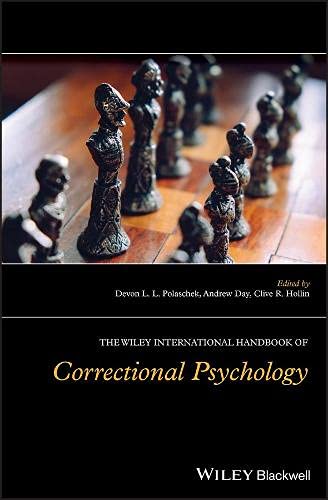
Amazon cover image
Image from Amazon.com

The Wiley international handbook of correctional psychology / edited by Devon L.L. Polaschek, Andrew Day, and Clive R. Hollin.

Contributor(s): Publisher: Hoboken, NJ : John Wiley & Sons, Inc., 2019Copyright date: ©2019Description: 1 online resource (xxiii, 816 pages)Content type:
  • text
Media type:
  • computer
Carrier type:
  • online resource
ISBN:
  • 9781119139973
  • 111913997X
  • 9781119139966
  • 1119139961
  • 9781119139980
  • 1119139988
Other title:
  • Correctional psychology
Subject(s): Genre/Form: Additional physical formats: Print version:: Wiley international handbook of correctional psychology.DDC classification:
  • 364.601/9 23
LOC classification:
  • HV9275 .W495 2019
Online resources:
Contents:
Intro; Title page; Copyright Page; Contents; About the Editors; Notes on the Contributors; Part I Correctional Psychology in Context; Chapter 1 Correctional Psychology: A Short History and Current Standing; A Brief History of Correctional Trends; Developing and Applying Psychology to Criminal Behavior and its Remediation; What is Correctional Psychology?; Introduction to the Handbook; Conclusions; Notes; References; Chapter 2 Being Ethical Psychologists in Correction Settings; Psychology's Morality and Codes; Principles; Addressing Moral Uncertainty; Conclusion; Acknowledgments; Note
Key ReadingsReferences; Chapter 3 The American Psychological Association's Misuse of the Role of Psychologist-as-Organizational-Consultant to Torture: Where Was the'Bright Line' Position?; The Hoffman Report; The Timeline of Events; The Ethical Debate: Lessons for Correctional Psychologists; Conclusion; Notes; Key Readings; References; Part II The Roles of Psychology in Managing Prisons and Offenders; Chapter 4 The Effects of Imprisonment; Individual Effects of Incarceration; Effects of Incarceration on Racial and Ethnic Minorities; Effects of Incarceration on Women; Special Considerations
Implications for PsychologistsConclusion; Key Readings; References; Chapter 5 Violence and the Pains of Confinement: PRISM as a Promising Paradigm for Violence Prevention; Introduction; Institutional Violence Prevention; On Approaches to Violence Risk Management; On the Pains of Confinement; A Structured Professional Approach to the Evaluation of Institutional Risk; The PRISM Process; From Risk Factors to Risk Processes; From Evaluation Through Scenarios Toward Interventions; Thinking About Situational Interventions; The Application of the PRISM Process; Achieving Organizational Change
How Is the PRISM Process Viewed in Practice?The Future Challenges for Situational Approaches; Key Readings; References; Chapter 6 Managing Difficult and Disruptive Prisoners; Definitional Issues; Prevalence of Behavior; Effects on Staff; Assessing Violence Risk; Managing Difficult and Disruptive Behavior; Conclusions; Notes; Key Readings; References; Chapter 7 Managing Suicide and Self-Harm; Introduction; The Scale and Nature of the Problem of Suicide and Self-Harm; Risk Factors for Suicide and Self-Harm in Correctional Settings; Interventions to Manage Suicide and Self-Harm
Barriers to ImplementationConcluding Comments and Good Practice Recommendations; Note; Key Readings; References; Chapter 8 Solitary Confinement and Punishment: Effects on Misconducts and Recidivism; Techniques for Punishing Inmates; Effects of Solitary Confinement; Why Is SC not an Effective Punisher?; Notes; Key Readings; References; Chapter 9 The Challenge of Managing Aging Prisoners; Health Status; Functional Health Status; Social Milieu; Mental and Emotional Health; Housing Accommodations; Future Directions; Conclusion; Key Readings; References
Tags from this library: No tags from this library for this title. Log in to add tags.
Star ratings
    Average rating: 0.0 (0 votes)
No physical items for this record

Includes bibliographical references and index.

Intro; Title page; Copyright Page; Contents; About the Editors; Notes on the Contributors; Part I Correctional Psychology in Context; Chapter 1 Correctional Psychology: A Short History and Current Standing; A Brief History of Correctional Trends; Developing and Applying Psychology to Criminal Behavior and its Remediation; What is Correctional Psychology?; Introduction to the Handbook; Conclusions; Notes; References; Chapter 2 Being Ethical Psychologists in Correction Settings; Psychology's Morality and Codes; Principles; Addressing Moral Uncertainty; Conclusion; Acknowledgments; Note

Key ReadingsReferences; Chapter 3 The American Psychological Association's Misuse of the Role of Psychologist-as-Organizational-Consultant to Torture: Where Was the'Bright Line' Position?; The Hoffman Report; The Timeline of Events; The Ethical Debate: Lessons for Correctional Psychologists; Conclusion; Notes; Key Readings; References; Part II The Roles of Psychology in Managing Prisons and Offenders; Chapter 4 The Effects of Imprisonment; Individual Effects of Incarceration; Effects of Incarceration on Racial and Ethnic Minorities; Effects of Incarceration on Women; Special Considerations

Implications for PsychologistsConclusion; Key Readings; References; Chapter 5 Violence and the Pains of Confinement: PRISM as a Promising Paradigm for Violence Prevention; Introduction; Institutional Violence Prevention; On Approaches to Violence Risk Management; On the Pains of Confinement; A Structured Professional Approach to the Evaluation of Institutional Risk; The PRISM Process; From Risk Factors to Risk Processes; From Evaluation Through Scenarios Toward Interventions; Thinking About Situational Interventions; The Application of the PRISM Process; Achieving Organizational Change

How Is the PRISM Process Viewed in Practice?The Future Challenges for Situational Approaches; Key Readings; References; Chapter 6 Managing Difficult and Disruptive Prisoners; Definitional Issues; Prevalence of Behavior; Effects on Staff; Assessing Violence Risk; Managing Difficult and Disruptive Behavior; Conclusions; Notes; Key Readings; References; Chapter 7 Managing Suicide and Self-Harm; Introduction; The Scale and Nature of the Problem of Suicide and Self-Harm; Risk Factors for Suicide and Self-Harm in Correctional Settings; Interventions to Manage Suicide and Self-Harm

Barriers to ImplementationConcluding Comments and Good Practice Recommendations; Note; Key Readings; References; Chapter 8 Solitary Confinement and Punishment: Effects on Misconducts and Recidivism; Techniques for Punishing Inmates; Effects of Solitary Confinement; Why Is SC not an Effective Punisher?; Notes; Key Readings; References; Chapter 9 The Challenge of Managing Aging Prisoners; Health Status; Functional Health Status; Social Milieu; Mental and Emotional Health; Housing Accommodations; Future Directions; Conclusion; Key Readings; References

Online resource; title from digital title page (viewed on April 10, 2019).

There are no comments on this title.

to post a comment.

Contact Us

Perpustakaan Tun Seri Lanang, Universiti Kebangsaan Malaysia
43600 Bangi, Selangor Darul Ehsan,Malaysia
+603-89213446 – Consultation Services
019-2045652 – Telegram/Whatsapp
Email: helpdeskptsl@ukm.edu.my

Copyright ©The National University of Malaysia Library