
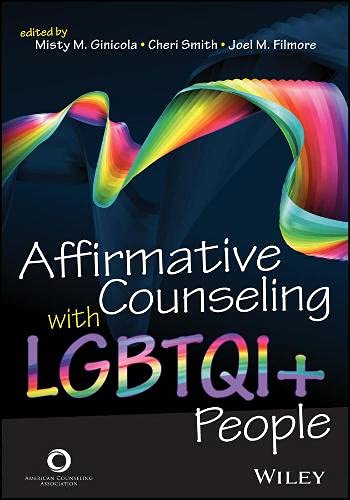
Amazon cover image
Image from Amazon.com

Affirmative Counseling with LGBTQI+ People / Misty M. Ginicola, Cheri Smith, Joel M. Filmore.

Contributor(s): Publisher: American Counseling Association, 2017Edition: 1stDescription: 1 online resourceContent type:
  • text
Media type:
  • computer
Carrier type:
  • online resource
ISBN:
  • 9781119375531
  • 1119375533
  • 9781119375517
  • 1119375517
Subject(s): Genre/Form: DDC classification:
  • 616.890086/64 23
LOC classification:
  • RC451.4.G39 G56 2017
NLM classification:
  • WM 55
Online resources:
Contents:
Affirmative Counseling with LGBTQI+ People; Contents; Preface; About the Editors; About the Contributors; Acknowledgments; Section I: Foundations; Chapter 1: Developing Competence in Working With LGBTQI+ Communities: Awareness, Knowledge, Skills, and Action; Awareness of Attitudes and Beliefs Self-Check; Multicultural Competence; Awareness of Attitudes and Beliefs; Knowledge; Skills; Action; Conclusion; Questions for Further Discussion; Resources; References; Chapter 2: The Science of Gender and Affectional Orientation; Awareness of Attitudes and Beliefs Self-Check
What Is Gender and Affectional Orientation?What Is the Biological Basis for Sexual Attraction?; What Is the Evidence for a Biological Cause for Gender and Affectional Orientation?; Conclusion; Questions for Further Discussion; Resources; References; Section II: Counseling Considerations and Counseling Strategies; Chapter 3: Growing Up LGBTQI+: The Importance of Developmental Conceptualizations; Awareness of Attitudes and Beliefs Self-Check; Typical Development; Physical; Cognitive; Personal; Social-Emotional; Moral; Cultural; The Application of Developmental Theories to LGBTQI+ Youth
The Elementary School ContextThe Middle School Context; The High School Context; Coming Out; Conclusion; Questions for Further Discussion; Resources; References; Chapter 4: LGBTQI+ Youth Development; Awareness of Attitudes and Beliefs Self-Check; Risks for LGBTQI+ Youth; Resilience and Well-Being; School and Community Support; Family Support; Conclusion; Questions for Further Discussion; Resources; References; Chapter 5: LGBTQI+ Persons in Adulthood; Awareness of Attitudes and Beliefs Self-Check; Early Adulthood; Identity and Intimacy; College and Occupation
Career Consideration and Workplace RightsMilitary Experiences; Middle Adulthood; Relationships; Marriage; Family Planning and Raising Children; Intimate Partner Violence (IPV); Late Adulthood; Conclusion; Questions for Further Discussion; Resources; References; Chapter 6: Identity Development, Coming Out, and Family Adjustment; Awareness of Attitudes and Beliefs Self-Check; Identity Formation; LGBTQI+ Identity Formation Models; The Influence of Other Demographic Factors; The Benefits and Challenges of Coming Out; Working With Families of Individuals Who Come Out; Conclusion
Questions for Further DiscussionResources; References; Chapter 7: Physical and Mental Health Challenges Found in the LGBTQI+ Population; Awareness of Attitudes and Beliefs Self-Check; Causes of Physical and Mental Health Impairments; General Physical Health Challenges; Emotional and Mental Health Challenges; Depression and Suicide; Anxiety Disorders; Substance Abuse; Barriers to Health Care; Protective Factors; Conclusion; Questions for Further Discussion; Resources; References; Chapter 8: Disaffirming Therapy: The Ascent and Descent of Sexual Orientation Change Efforts
In: Wiley e-books
Tags from this library: No tags from this library for this title. Log in to add tags.
Star ratings
    Average rating: 0.0 (0 votes)
No physical items for this record

Owing to Legal Deposit regulations this resource may only be accessed from within National Library of Scotland. For more information contact enquiries@nls.uk. StEdNL

Affirmative Counseling with LGBTQI+ People; Contents; Preface; About the Editors; About the Contributors; Acknowledgments; Section I: Foundations; Chapter 1: Developing Competence in Working With LGBTQI+ Communities: Awareness, Knowledge, Skills, and Action; Awareness of Attitudes and Beliefs Self-Check; Multicultural Competence; Awareness of Attitudes and Beliefs; Knowledge; Skills; Action; Conclusion; Questions for Further Discussion; Resources; References; Chapter 2: The Science of Gender and Affectional Orientation; Awareness of Attitudes and Beliefs Self-Check

What Is Gender and Affectional Orientation?What Is the Biological Basis for Sexual Attraction?; What Is the Evidence for a Biological Cause for Gender and Affectional Orientation?; Conclusion; Questions for Further Discussion; Resources; References; Section II: Counseling Considerations and Counseling Strategies; Chapter 3: Growing Up LGBTQI+: The Importance of Developmental Conceptualizations; Awareness of Attitudes and Beliefs Self-Check; Typical Development; Physical; Cognitive; Personal; Social-Emotional; Moral; Cultural; The Application of Developmental Theories to LGBTQI+ Youth

The Elementary School ContextThe Middle School Context; The High School Context; Coming Out; Conclusion; Questions for Further Discussion; Resources; References; Chapter 4: LGBTQI+ Youth Development; Awareness of Attitudes and Beliefs Self-Check; Risks for LGBTQI+ Youth; Resilience and Well-Being; School and Community Support; Family Support; Conclusion; Questions for Further Discussion; Resources; References; Chapter 5: LGBTQI+ Persons in Adulthood; Awareness of Attitudes and Beliefs Self-Check; Early Adulthood; Identity and Intimacy; College and Occupation

Career Consideration and Workplace RightsMilitary Experiences; Middle Adulthood; Relationships; Marriage; Family Planning and Raising Children; Intimate Partner Violence (IPV); Late Adulthood; Conclusion; Questions for Further Discussion; Resources; References; Chapter 6: Identity Development, Coming Out, and Family Adjustment; Awareness of Attitudes and Beliefs Self-Check; Identity Formation; LGBTQI+ Identity Formation Models; The Influence of Other Demographic Factors; The Benefits and Challenges of Coming Out; Working With Families of Individuals Who Come Out; Conclusion

Questions for Further DiscussionResources; References; Chapter 7: Physical and Mental Health Challenges Found in the LGBTQI+ Population; Awareness of Attitudes and Beliefs Self-Check; Causes of Physical and Mental Health Impairments; General Physical Health Challenges; Emotional and Mental Health Challenges; Depression and Suicide; Anxiety Disorders; Substance Abuse; Barriers to Health Care; Protective Factors; Conclusion; Questions for Further Discussion; Resources; References; Chapter 8: Disaffirming Therapy: The Ascent and Descent of Sexual Orientation Change Efforts

Includes bibliographical references and index.

There are no comments on this title.

to post a comment.

Contact Us

Perpustakaan Tun Seri Lanang, Universiti Kebangsaan Malaysia
43600 Bangi, Selangor Darul Ehsan,Malaysia
+603-89213446 – Consultation Services
019-2045652 – Telegram/Whatsapp
Email: helpdeskptsl@ukm.edu.my

Copyright ©The National University of Malaysia Library