
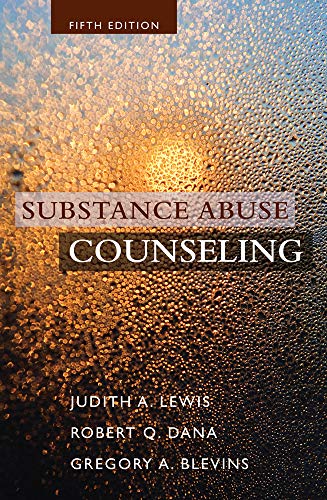
Substance abuse counseling / Judith A. Lewis, Governors State University, Robert Q. Dana, University of Maine, Gregory A. Blevins, Governors State University.
Publisher: Stamford, CT : Cengage Learning, [2015]Copyright date: ©2015Edition: Fifth editionDescription: xiv, 303 pages : illustrations ; 25 cmContent type:- text
- unmediated
- volume
- 9781285454375
- 1285454375 (hbk)
| Item type | Current library | Home library | Call number | Materials specified | Copy number | Status | Date due | Barcode | |
|---|---|---|---|---|---|---|---|---|---|
| TANDA MERAH | PERPUSTAKAAN TUN SERI LANANG | PERPUSTAKAAN TUN SERI LANANG TANDA MERAH-P. TUN SERI LANANG (ARAS 5) | RC564.L49 2015 (Browse shelf(Opens below)) | 1 | Available | 00002195414 |
Buku Bacaan Asas Fakulti
Includes bibliographical references and indexes.
Machine generated contents note: pt. 1 Introduction -- ch. 1 Substance Abuse Counseling for the 21st Century -- Defining Substance Abuse -- Defining 21st Century Substance Abuse Counseling -- Evidence-Based Practices -- A Respectful and Positive Approach -- Substance Abuse Diagnosis: Continuum, Not Dichotomy -- Collaborative Treatment Planning -- Social Context -- Multiculturalism and Diversity -- Social Justice and Advocacy -- Ethical Practice -- Counselor Roles and Settings -- Summary -- Questions for Thought and Discussion -- References -- ch. 2 Drugs and Their Effects -- Introduction -- Factors That Affect a Drug's Effects -- Characteristics of Drugs -- Benefits And Risks Of Drug-Administration Methods -- Physiological Functioning of the User -- Effects Of Parasympathetic And Sympathetic Control -- Psychological Characteristics of the User -- Sociocultural Environment -- Drug-Classification Systems -- Summary -- Questions for Thought and Discussion -- References.
Note continued: Group Models Used in the Substance Abuse Context -- Psycho-Educational Groups -- Skill Development Groups -- Cognitive-Behavioral Groups -- Support Groups -- Interpersonal Process Group Therapy -- Multiculturalism in the Group Counseling Context -- Ethical Issues in Group Counseling -- Summary -- Questions for Thought and Discussion -- References -- ch. 7 Maintaining Change in Substance Use Behaviors -- The Ethical Imperative -- Relapse Prevention Models -- Biopsychosocial Model -- Determinants of Relapse -- Relapse Prevention Strategies -- Summary -- Questions for Thought and Discussion -- References -- pt. 3 The Context Of Change -- ch. 8 Working with Families -- Systems Theory -- Substance Abuse and the Family System -- Stages in Family Recovery -- Effects on Children -- Family Counseling Competencies -- Multicultural Competence in Family Counseling -- Ethics in Family Counseling -- Summary -- Questions for Thought and Discussion -- References.
Note continued: ch. 3 Motivational Interviewing -- The Meaning and Ethical Use of Motivational Interviewing -- MI Spirit -- Motivational Interviewing Principles -- Motivational Interviewing Across Settings -- Summary -- Questions for Thought and Discussion -- References -- pt. 2 The Process Of Behavior Change -- ch. 4 Assessment and Treatment Planning -- Ethics -- The Comprehensive Assessment Process -- Assessment Devices -- Treatment Planning -- Summary -- Questions for Thought and Discussion -- References -- ch. 5 Helping Clients Change -- Ethics -- The Counseling Relationship -- Interrupting Substance Use Behaviors -- Linking Clients to 12-Step and Other Self-Help Groups -- Co-Occurring Substance Abuse and Mental Health Problems -- Summary -- Questions for Thought and Discussion -- References -- ch. 6 Empowering Clients Through Group Work -- Collaboration and Empowerment in Group Procedures -- Ground Rules -- Collaborative Goal Setting.
Note continued: ch. 9 Program Planning and Evaluation -- Environmental Contingencies -- Accountability for Outcomes -- Program Planning -- Evaluation -- Multiculturalism and Social Justice -- Ethics -- Summary -- Questions for Thought and Discussion -- References -- ch. 10 Preventing Substance Abuse -- The Concept of Prevention -- General Model of Prevention -- Determining the Purpose of Prevention -- Developing a Causal Model -- Producing Change -- Effectiveness of Prevention Programs -- Summary -- Questions for Thought and Discussion -- References -- Appendixes -- Appendix A Psychosocial and Substance Use History -- Appendix B Initial Behavioral Assessment and Functional Analysis -- Appendix C Comprehensive Drinker Profile -- Appendix D Family Drinking Survey -- Appendix E Useful Web Sites -- Appendix F Valuable Treatment Manuals.
There are no comments on this title.